This site has been created by WasteWaterEducation.org a 501(c)3 not for profit. This is a resource site for anyone interested in learning more about how to use and maximize use of conventional, advanced and community integrated wastewater systems
2018 was the last time an attempt was made to create a comprehensive, rational, generally accepted public health code governing onsite wastewater systems in Michigan.
Much has been published, and commented upon, that Michigan is the only State left that doesn’t have a uniform statewide standard as part of either its environmental or public health administrative code.
WasteWater Education has been actively involved in the process since its founding in 2003 – principally as an independent organization that seeks to combine all points of view and rationalize the science rather than the rhetoric.
In 2018 the effort fell apart due mainly to lack of common sense and a rush to try to enact legislation that had little broad based support among stakeholders. It also included many unfunded mandates that placed an undue burden on already cash strapped local health departments while leaving gaping loopholes in areas such as inspections, installer qualifications, and, perhaps most importantly, the need to allow for regional geologic differences.
Then, as now, we were able to invite commentary from surrounding states who, having gone through a similar lengthy rule making process, emerged with a working, accepted, comprehensive plan that has been law ever since.
You now have your chance to weigh in on the most recent attempt to craft a similar document for Michigan.
The Invisible Shield, a four-part documentary series from RadicalMedia made possible by Bloomberg Philanthropies, reveals how the field of public health has saved countless lives in the U.S., protecting people from the constant threat of disease and increasing lifespans. The series explores the hidden public health infrastructure that makes modern life possible. It highlights the thousands of unsung heroes — physicians, nurses, scientists, activists, reformers, engineers, and government officials — who work together to improve health outcomes, from the days of cholera and smallpox through the most recent battle with COVID-19.
The Invisible Shield premieres Tuesday, March 26, 2024, 10-11 p.m. ET (check local listings) on PBS, with all four episodes available for streaming on PBS.org and the PBS App.
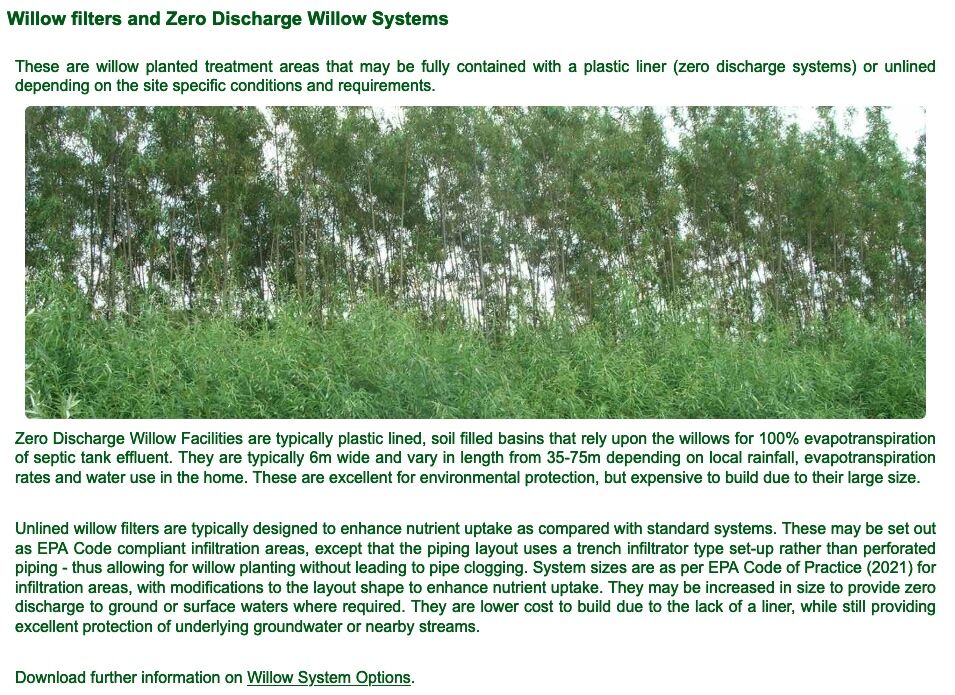
Recording Available When: Feb 5, 2024 10:00 AM Hawaii Topic: Eco-friendly sewage options; including treatment wetlands; willow system options and source separation technologies.
Féidhlim Harty is an environmental consultant and writer. His company, FH Wetland Systems, established in 1996, offers designs and guidance on waterway repair and rewilding, eco-friendly wastewater treatment training and education, and holistic landuse management for catchment protection and regeneration.
As we increasingly recognise the role of our species and society in shaping our landscapes, we see the impacts of past decisions on the ecosystems and other species with whom we share this beautiful planet. We know at a deep level that simply sustaining our current cultural norms is no longer desirable. Thus we need to look beyond sustainability (simply not dying) and towards regenerative solutions in every area of our lives and culture. The solutions offered on this website are among the best regenerative tools and techniques for addressing water and waterway management, as well as farm-scale and catchment scale solutions for cultivating a world that works with nature rather than against.
A question was asked during the session – “In terms of reduction of TSS, NH3, NO3, TP, BOD etc. I’d propose that a standard sized domestic scale system, whether constructed wetland, gravel reed bed or vertical flow reed bed, will achieve secondary treatment standard if sized appropriately. In the Irish context I propose that the EPA recommended size of 5m2/pe be increased to about 8m2/pe to achieve this standard, but the general principle applies nonetheless.
A much more thorough breakdown of figures is presented in Kadlec and Wallace’s Treatment Wetlands.
I hope that helps to answer that question raised at the end of the talk.
Kind regards and thanks again,
Féidhlim
FH Wetland Systems – Creating Spaces for NatureKnocknaskeagh, Lahinch, Co. Clare – 065-7075631https://www.wetlandsystems.ie
I forgot to mention that Septic Tank Options and Alternatives was written as an overview of options available for sanitation which may be of use to the people preparing Codes for their areas. It is written mainly in the Irish context, but applicable anywhere where flush toilets are the norm. My working title was “The unofficial EPA Guide to Wastewater Treatment”; to include a greater overview of dry toilet options and source separation options than our official EPA Code gives.
I’m also offering training this spring, looking at wastewater treatment (much of which we already covered yesterday) and water flows in the wider landscape (what I was beginning to look at in the closing part of yesterday’s talk) and EcoVisioning, which looks more at our attitudes around the various planetary challenges, and how to hold a clear coherent vision for a positive future. http://www.wetlandsystems.ie/Next%20Workshop.html “
A reminder to all that January 24-27, 2024 is the Water and Wastewater Education Transport and Training Expo in Indianapolis. We will be providing information about all the education sessions we are hosting on the 24th and 25th shortly.
But in the meantime here is a Registration discount code. Do stop by and visit our Booth!




You must be logged in to post a comment.