Category Archives: Education

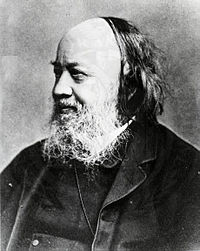
July 6, 1890: Death of Edwin Chadwick

safedrinkingwaterdotcom's avatarThis Day in Water History

0124 Edwin ChadwickJuly 6, 1890: Death of Edwin Chadwick. Edwin Chadwick was an English social reformer who was noted for his work to reform the Poor Laws and improve sanitary conditions and public health. The appointment of the Poor Law Commission in 1834 which included Edwin Chadwick is widely believed to be the beginning of the sanitary movement in England. Through Chadwick’s work and influence, more sophisticated health statistics were collected which revealed that public health problems were increasing at a rapid rate. Chadwick imposed his “sanitary idea” which focused on disease prevention. A survey published by the Poor Law Commission in 1842 detailed the horrific working and living conditions in England at the time. The report linked epidemic disease, especially related to fever diseases (typhoid, typhus and cholera) to filthy environmental conditions. Privy vaults, shallow urban wells and piles of garbage and animal excrement in the streets were all related to…

View original post 467 more words

Is this Heaven? No it’s Manistee!

And if you are the lucky winner of our FY2014 Raffle Grand Prize you will get to spend 4-6 whole days here! GRAND PRIZE! A Four Night lodging/meals package at Manistee Little River Casino Resort. Black out periods apply. Call, email or post us your ticket requests, just $10 per ticket.

June 29, 1989: SWTR and TCR Regulations Promulgated

safedrinkingwaterdotcom's avatarThis Day in Water History

0629 SWTR Federal RegisterJune 29, 1989:  Surface Water Treatment Rule and Total Coliform Rule promulgated on this date. These are two of the most important drinking water regulations adopted by the USEPA under the Safe Drinking Water Act of 1974. A summary of the SWTR stated:  “This notice, issued under the Safe Drinking Water Act, publishes maximum contaminant level goals for Giardia lamblia viruses, and Legionella; and promulgates national primary drinking water regulations for public water systems using surface water sources or ground water sources under the direct influence of surface water that include (1) criteria under which filtration (including coagulation and sedimentation, as appropriate) are required and procedures by which the States are to determine which systems must install filtration, and (2) disinfection requirements. The filtration and disinfection requirements are treatment technique requirements to protect against the potential adverse health effects of exposure to Giardia lamblia, viruses, Legionella, and heterotrophic bacteria, as…

View original post 88 more words

We’re gearing up for FY 2014-15 with our Annual Raffle

This is your opportunity to help us.

2014 WasteWaterEducation raffleOur 2014-15 Annual Operating Support
Fund Raising Raffle!!

State of MI Charitable Gaming Division
License #: R26739
Tickets are $10 each
Only 1000 have been printed!
Call 231 233 1806
or email us to purchase or to help sell tickets. 
Or mail your payment to PO Box 792, Traverse City, MI 49685-0792. Checks payable to “WasteWater Education”

Drawing will take place 11 am on Saturday, July 26, 2014 at Four Points by Sheraton, Kalamazoo, MI

For a look at these great Prizes – click here!

lrboiresortWasteWater Education is deeply appreciative for the support of the following entities who have donated the 2014 amazing Raffle Prizes – all centered around our water theme! GRAND PRIZE! A Four Night lodging/meals package at the Little River Casino Resort. Black out periods apply.

front2013* Second and Third Prizes: Heirloom Ice Fishing Decoys by Heritage Artist Dave Kober
* 2 limited edition prints from Lindsay Olson
* 4 passes to the Boyne Mountain Avalanche Bay water park
* Bear 916 Effluent Filter donated by Milan Vault
* 4 plush Polar Fleece windbreakers (choice of M, L, XL, XXL) donated by Anua
* $100 Gift Certificate (non-alcoholic products only) from Northern Natural Organics.

June 22, 1969: Cuyahoga River Catches Fire

Why we do what we do.

safedrinkingwaterdotcom's avatarThis Day in Water History

1101 Cuyahoga R Fire 1952June 22, 1969:  The June 22, 1969 fire on the Cuyahoga is the “seminal” event in the history of water pollution control in America, helping to spur the growth of the environmental movement and the passage of national environmental legislation. “Never before had an image so thoroughly driven home the deteriorating plight of our nation’s waterways,” one environmental group explained on the fire’s thirtieth anniversary. “The burning river mobilized the nation and became a rallying point for passage of the Clean Water Act.”17 Despite its national importance as a symbol of environmental decline, the 1969 fire on the Cuyahoga was a relatively minor story in Cleveland at the time.18 For northeast Ohio, and indeed for many industrialized areas, burning rivers were nothing new, and the 1969 fire was less severe than prior Cuyahoga conflagrations. It was a little fire on a long-polluted river already embarked on the road to…

View original post 64 more words

What Earth Day means to me: Jason Menchhofer

What Earth Day means to me – More …..

Jason Menchhofer. FY 2014-15 Board Chair. WasteWater Education 501(c)3

Earth Day is a time to reflect on the importance of taking care of the many valuable natural resources which are found all around us.

For me, one of the most valuable natural resources has always been water.

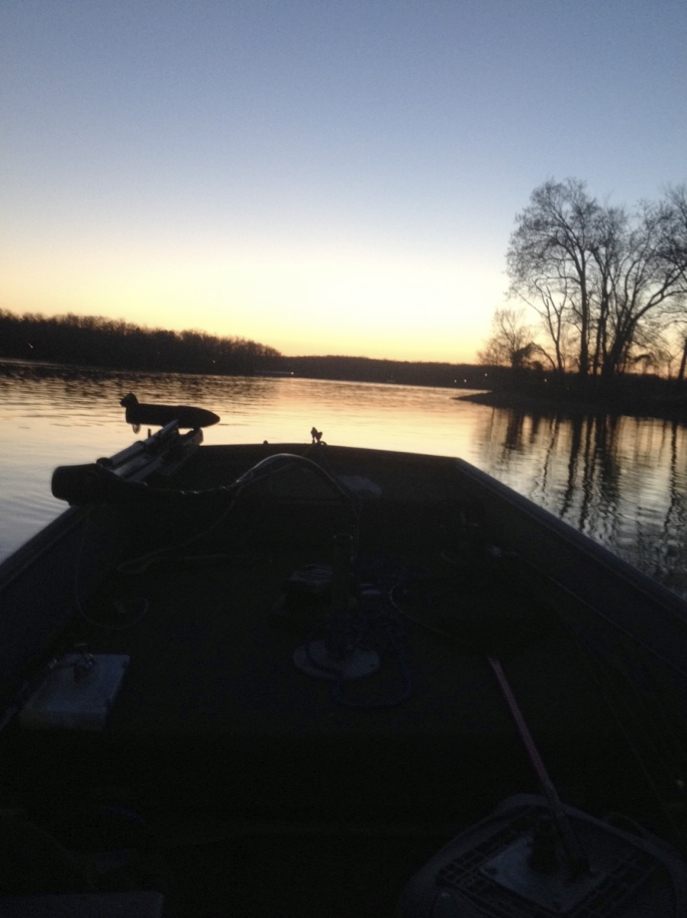
Sunset on Kentucky Lake, April 9, 2014


May 7, 1848: English Public Health Act

safedrinkingwaterdotcom's avatarThis Day in Water History

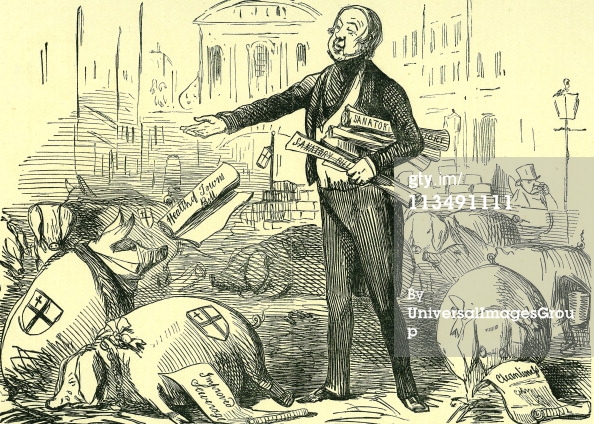
Public Health Act of 1848 Public Health Act of 1848

May 7, 1848:  “Public Health Act is passed by a reluctant Parliament fearful of spread of cholera. National Board of Health is formed and leads local boards to regulate water supply, sewerage, offensive trades.”

“The first local boards [of health] were created under the Public Health Act 1848 (11 & 12 Vict. c.63). The aim of the act was to improve the sanitary condition of towns and populous places in England and Wales by placing the supply of water, sewerage, drainage, cleansing and paving under a single local body. The act could be applied to any place in England and Wales except the City of London and some other areas in the Metropolis already under the control of sewer commissioners. The Act was passed by the incoming Liberal government, under Prime Minister Lord John Russell, in response to urgings by Edwin Chadwick.”

View original post

May 5, 1858: Birth of Dr. John L. Leal- a Hero Of Public Health

safedrinkingwaterdotcom's avatarThis Day in Water History

Dr. John L. Leal Dr. John L. Leal

May 5, 1858: 156th anniversary of the birth of John L. Leal, physician and water treatment expert who pioneered chlorine disinfection in the U.S. There are many unsung heroes who contributed significantly to public health at the turn of the 20th century. John L. Leal is one of them and after reading this, I think you will agree that he did more than most to save people’s lives.

John L. Leal was born in the small town of Andes, New York on May 5, 1858. His father, John Rose Leal was a physician who joined the 144th Regiment, New York Volunteers and fought in the Civil War. During the siege of Charleston, South Carolina, John Rose Leal contracted what was most likely a case of amoebic dysentery from contaminated drinking water. He suffered from the disease for more than 17 years before he finally…

View original post 1,639 more words